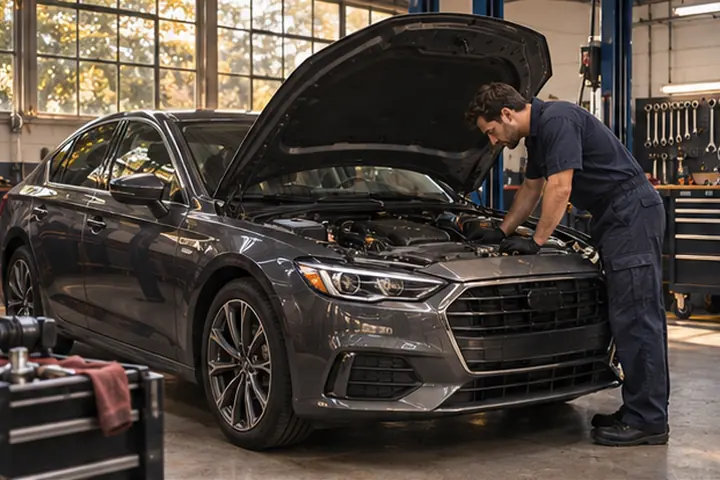
How Much Does a Transmission Fluid Change Cost — And Do You Need It?
Transmission fluid lubricates moving parts, cools the transmission, helps it shift smoothly, and protects seals and clutches from wear. When it gets old, dirty, or low, shifting turns rough, the transmission overheats, and a repair that should have cost a few hundred dollars can turn into a rebuild costing thousands.
Yet transmission service confuses many owners. Some manufacturers call their fluid “lifetime fill” and list no interval. Some shops push a flush at every visit. Others say never to touch it on a high-mileage car. So how much does a fluid change cost, when do you need one, and what is the difference between a change and a flush? All prices below are 2026 estimates in USD and vary by car, location, and shop.
Transmission Fluid Change Cost in 2026
For most cars, a standard fluid change costs $150 to $400 in 2026 at an independent shop, including fluid, a new filter where applicable, a pan gasket, and labour. Main dealers typically charge 30–50% more. The price varies because transmissions are not all the same. A simple four-speed automatic may take inexpensive fluid. A modern eight-speed automatic or a continuously variable transmission (CVT) may need specific fluid costing $20 to $40 per quart, plus a scan tool to check the level at the correct temperature.
Cost by Transmission Type
| Transmission Type | Typical Cost (USD, 2026) |
|---|---|
| Manual transmission | $80–$200 |
| Conventional automatic (4–6 speed) | $150–$300 |
| Modern automatic (8–10 speed) | $250–$450 |
| CVT (continuously variable) | $200–$400 |
| Dual-clutch (DCT) | $300–$600 |
| Hybrid / e-CVT | $200–$400 |
A proper fluid change should include draining the old fluid, replacing the filter and pan gasket where the design allows it, cleaning the pan and magnet, refilling with the correct fluid, and a short test drive. On many modern cars there is no dipstick, so the level must be checked at a specific fluid temperature using a scan tool — a step that separates a careful shop from a rushed one. Ask whether the quote includes the filter; some quick-lube shops quote a low fluid-only price, then add the filter as an extra.
Fluid Change vs Flush: What Is the Difference?
A fluid change (drain and fill) removes the fluid in the pan, typically 40–50% of the total, and replaces it with fresh fluid. A flush uses a machine to push new fluid through the whole system, including the torque converter and cooler lines, replacing nearly all of the old fluid.
A flush sounds better, and on a well-maintained transmission it can be. But on a high-mileage transmission that has never been serviced, a flush can dislodge sludge that was holding worn clutches together, and shifting can get worse. That is why many experienced mechanics are cautious about flushing a neglected transmission.
Use this rule of thumb:
- Under 60,000 miles with regular service history: Either a change or a flush is fine. A change is cheaper and gentler.
- 60,000 to 100,000 miles, history unknown: Do a drain and fill, drive a few thousand miles, then do another one. Two gentle changes are safer than one aggressive flush.
- Over 100,000 miles, never serviced, but shifting fine: Do a drain and fill only. Do not let anyone talk you into a power flush.
- Already slipping, banging into gear, or overheating: Skip the flush and get a diagnosis. Fresh fluid cannot repair worn clutches or a failing valve body.
A flush typically adds $100 to $200, bringing the total to $250 to $500 for most automatics. If a shop insists a flush is mandatory or refuses a simple drain and fill, get a second opinion — and read our guide to signs your mechanic is scamming you.
How Often Should You Change Transmission Fluid?
There is no single answer, because manufacturers disagree. A “lifetime fill” claim usually means the lifetime of the warranty, not the lifetime of the car. Fluid degrades with heat and time regardless of what the brochure says.
As a general guide: conventional automatic every 30,000 to 60,000 miles; CVT every 30,000 to 50,000 miles, since CVTs are especially sensitive to degraded fluid; manual every 30,000 to 60,000 miles; dual-clutch every 40,000 miles is common, but follow the manufacturer exactly. For severe service — towing, mountain driving, frequent stop-and-go, hot climates — halve the interval. Heat is the enemy of transmission fluid.
Check your owner’s manual first, but treat “lifetime” claims with scepticism if you plan to keep the car beyond 100,000 miles. If you are buying a used car, service history is one of the most valuable things to verify. Our pre-purchase inspection checklist covers what to look for, including fluid colour and smell.
Signs You Need a Transmission Fluid Change
Rough, Delayed, or Hard Shifting
If the car hesitates before engaging drive or reverse, clunks into gear, or shifts with a jerk, degraded fluid is a likely cause. Fresh fluid restores proper hydraulic pressure. If the problem persists after a fluid change, the cause is mechanical and needs diagnosis.
Slipping Gears
Slipping — engine revs rise but the car does not accelerate as it should — is more serious. It can be caused by low or degraded fluid, but it can also mean worn clutches. Do not keep driving a slipping transmission hoping it will improve; every slip generates heat and wear.
Dark, Burnt-Smelling Fluid
Fresh automatic transmission fluid is red or pink and translucent, with a slightly sweet smell. Fluid that is dark brown or black, opaque, or smells burnt has been overheated and is no longer protecting the transmission. On cars with a dipstick you can check this yourself; on sealed transmissions a shop will need to sample it. Burnt fluid means service soon, not in another year.
Overheating or Warning Lights
Many modern cars have a transmission temperature warning. Overheating is often linked to degraded fluid, a blocked cooler, or low fluid level. If a warning appears, stop towing, reduce speed, and have the car checked promptly. A check engine light can also be triggered by transmission faults, so do not assume it is an engine problem until the car is scanned.
Leaks usually show as red or brown spots under the centre of the car, often from the pan gasket or axle seals. A small leak caught early is cheap; one ignored until fluid runs low can destroy the transmission.
What Happens If You Skip It?
Skipping fluid changes causes slow, cumulative damage: varnish builds up on valves, seals harden and leak, clutches wear faster, and the transmission runs hotter. Shifting gets gradually worse, and because the decline is slow, many owners do not notice until the damage is expensive.
The comparison is stark. A fluid change costs $150 to $400. A valve body replacement costs $1,000 to $2,500. A rebuild costs $2,500 to $5,000 for most cars, and $5,000 to $8,000 or more for luxury cars, trucks, and CVTs that are replaced rather than rebuilt. Regular fluid service is one of the cheapest insurance policies you can buy for your car.
DIY or Professional?
A manual transmission fluid change is a realistic DIY job: drain, refill through the fill plug, and check the level. Some older automatics with a dipstick and a drain plug are also DIY-friendly. Most modern automatics are not. They have no dipstick, require a precise fill at a specific temperature, use expensive model-specific fluid, and often need the pan dropped to change the filter. Getting the level wrong can cause shifting problems or overheating.
If you do DIY, use only the fluid specification in your owner’s manual. “Universal” fluid is not universal, and the wrong fluid in a CVT can cause expensive damage.
What to Ask Your Mechanic
- “What fluid does my car need, and is it the exact specification in the manual?” Get the spec in writing. Wrong fluid is a costly mistake.
- “Is this a drain and fill or a flush, and why do you recommend that one for my car’s mileage?” The answer should reference your car’s condition, not a sales script.
- “Does the price include the filter and pan gasket?” If not, ask what the total will be with them.
- “How will you check the fluid level — dipstick or scan tool at temperature?” On a sealed transmission, a scan-tool check is correct.
- “Can you show me the old fluid?” Dark, burnt fluid confirms the service was needed.
- “What is the warranty on the service?” Look for at least 12 months or 12,000 miles.
If the shop cannot answer clearly, or pressures you into a flush you did not ask for, walk away. Learning how to find an honest mechanic is worth more than any single service discount.
Frequently Asked Questions
How much does a transmission fluid change cost?
In 2026, a fluid change costs $150 to $400 for most cars at an independent shop. Manuals are cheaper at $80 to $200, while dual-clutch and modern 8–10 speed automatics can reach $300 to $600. A flush adds $100 to $200. Dealers charge 30–50% more than independent shops.
Is a transmission flush better than a fluid change?
Not always. A flush replaces more fluid but is more aggressive, and can cause problems on a high-mileage transmission never serviced before. For most cars, a regular drain and fill is safer and cheaper.
How often should transmission fluid be changed?
Every 30,000 to 60,000 miles for most automatics, and every 30,000 to 50,000 miles for CVTs. Follow your owner’s manual, but treat “lifetime fill” claims with scepticism if you plan to keep the car beyond 100,000 miles. Towing, hot climates, and stop-and-go driving shorten the interval.
Can changing transmission fluid damage my car?
On a healthy, regularly serviced transmission, no. On a very high-mileage transmission that has never been serviced and is already slipping, a flush can make shifting worse by dislodging deposits. A gentle drain and fill is safer there, and a slipping transmission needs a diagnosis before any fluid service.
Conclusion: Cheap Maintenance, Expensive Neglect
A fluid change is one of the best-value services you can buy. For $150 to $400 every few years, you protect a component that costs $2,500 to $8,000 to rebuild or replace. Do it regularly, use the correct fluid, and choose a drain and fill over an aggressive flush when your car’s history is unknown. If you are due, book a fluid change at a trusted independent shop and take the questions from this guide with you.